A Very Italo Christmas Cheer
Happy Holidays, stay on the 4/4 beat.
The Italian Disco Stories team wishes all of you the happiest Holidays. Let us tide you over the festivities with a small but mighty selection of Italo-style Christmas music—whatever your creed might be, you will find something for you to enjoy.
We tried to limit it to 80s-style covers, but if you want to hear more traditional arrangements, look up the compilation Natale con i tuoi, where the likes of Giuni Russo, Rettore, and Ornella Vanoni perform Christmas standards.
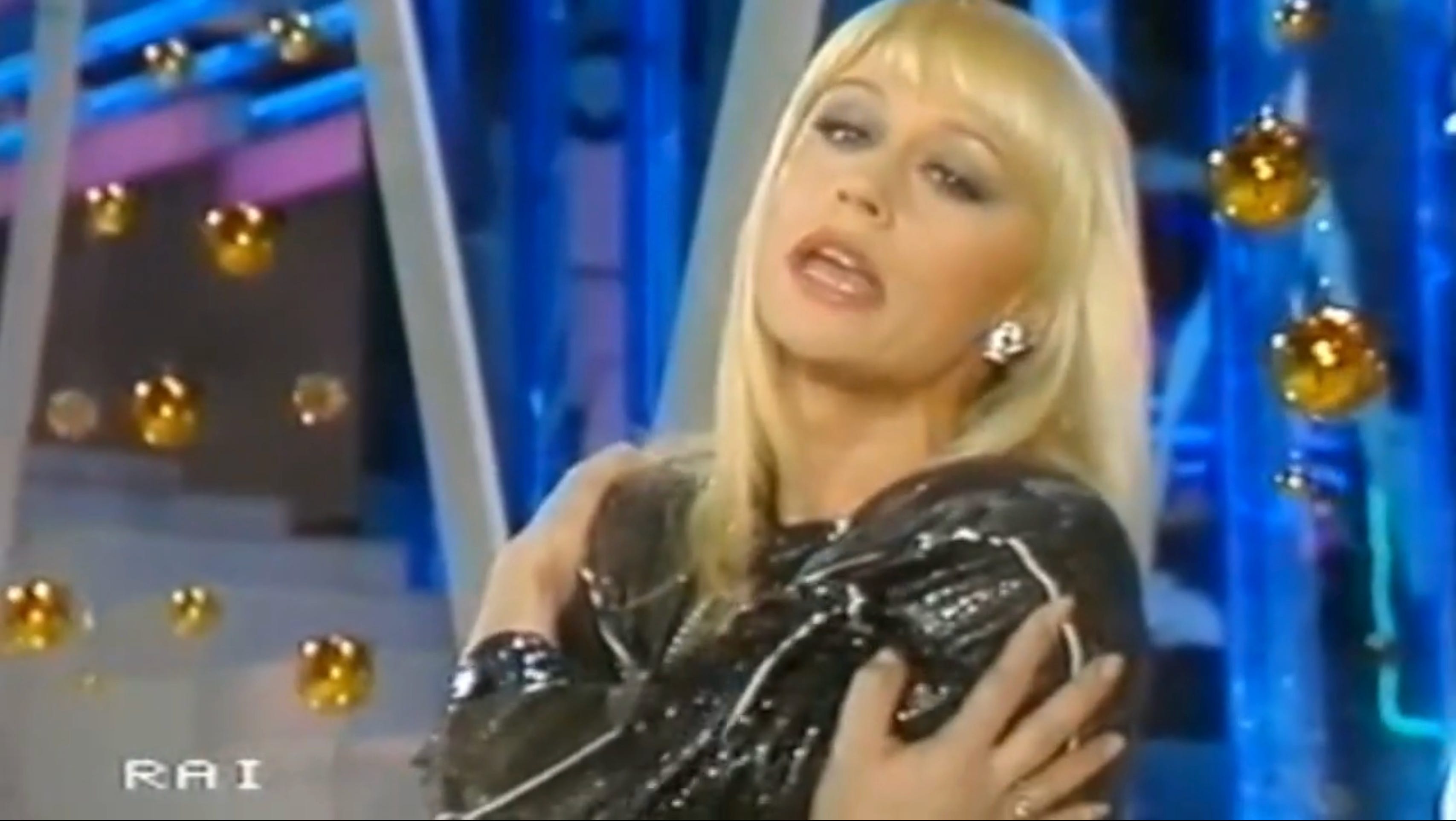
Raffaella Carrà: Buon Natale
Allow Angelica to quote herself from the feature she wrote last year on the best Christmas songs across the continent:
Raffaella Carrà is best known for her upbeat odes to the joys of life and her self-deprecating retellings of crushes past. Still, she can also fully own a ballad, which she amply demonstrated in the sensual “Forte Forte Forte.”
With “Buon Natale,” which debuted as the opening theme of her variety talk show Pronto Raffaella during the 1984 holiday season, she wishes “Merry Christmas” to a host of people and demographics who do not get to partake in the merriment: these include the sick ones, those stuck at work, those without love, and those bound to die alone. Its instrumentation, where keys are joined by drums and synth, leads to an anthemic refrain not too dissimilar from Michael Jackson’s “Heal the World.” Given Carrà’s status as a global queer icon, it’s not hard to interpret this song as a dedication to all the outcasts that, at least in the 1980s, were shunned from traditional celebrations.
Heather Parisi: Jingle Bells
No notes, all praise for this Italo version of Jingle Bells courtesy of Heather Parisi, complete with an instrumental base that combines electronics and the lush feel of your standard Holiday-appropriate orchestration. It could pass for an early Madonna release!
Lorella Cuccarini: Medley di Natale
In the 7th edition of Fantastico, Lorella Cuccarini delights us with a child-oriented medley of Christmas-themed songs. Set-wise, the most obvious references are the Christmas-eve scenes in The Nutcracker (complete with a giant tree!) and, based on Cuccarini’s own costume wind-up-doll-like costume Coppelia.
Ivan Cattaneo: Tu scendi dalle stelle
“Tu scendi dalle stelle” means “you descend from the stars,” and this quintessentially pastoral-style Italian Christmas carol was written in 1744 by Sant’Alfonso Liguori. While its original lacks the spark and twinkle of, say, a Jingle Bells or a the anthemic solemnity of “Gloria in excelsis deo,” polymath performer and artist Ivan Cattaneo gave it the Italo Disco treatment: think, lush electronic bassline and futuristic, artfully distorted vocal track. To watch the live exhibition, click on this Facebook link— which did not let us embed it.
Various Artists: A Lush Nativity Scene
The Fininvest variety program Premiatissima interpreted the assignment by conjuring trippy nativity scene that’s a perfect hybrid between an opulent Fellini movie, Aldous Huxley’s The Doors of Perception, and Lamberto Bava’s would-be sword-and-sorcery miniseries. Rather than focusing on the more standard Christmas-themed iconography, costume designer Enrico Ruffini and musician Fabrizio Fattori dwelled on the riches and sensuous realms of Central Asia, where the Three Wise Kings hailed from. If your favorite sequence in The Nutcracker is the Arabian Dance (aka “Coffee”), then this video will hit very close to home.
Thank you, thank you, thank you for your unwavering support, against the ever-changing algorithm. We will see you again in 2026, we have great content banked, including our labor(s) of love that are the multi-part series started in December


Love the Premiatissima nativity scene concept. Flipping the standard pastoral European imagery to focus on Central Asian opulence for the Three Kings is such a smart move becaus eit reminds us these weren't local shepherds. I grew up with super traditional Italian nativity sets and they always sanitize how exotic those figures actually were. That Fellini meets sword-and-sorcery vibe probably confused alot of viewers back then but honestly makes way more historical sense than the usual sanitized versions.