

Festivalbar Was the Soundtrack of Italian Summers (1964-2007)
Long before streaming playlists, Festivalbar crowned the songs of the season—and turned Italo disco, Eurodance, and international dance-pop into household staples.


Where Sanremo was more about the textbook definition of canzone italiana and its auteur and wholesome components, Festivalbar was its youth-focused and commercial counterpart. It was the purview of “tormentoni,” i.e., earworms, by design.
Festivalbar started via jukeboxes: back in 1964, in Cremona, Vittorio Salvetti came up with the idea of finding a way to determine and track what songs received the most plays on jukeboxes located inside bars, which would, in turn, determine the most popular song of the summer. Thus, a device that could count the plays was installed inside jukeboxes and tallied how many tokens went to each track on the device’s media library. This, in turn, would determine which track got the most tokens within that device, then on a city-wide and nation-wide level. Italy uses the term “gettonato” to indicate something in demand, but the origin of the term actually indicated something that was, literally, receiving tokens. The intent was to give an award to the songs that received the most plays.
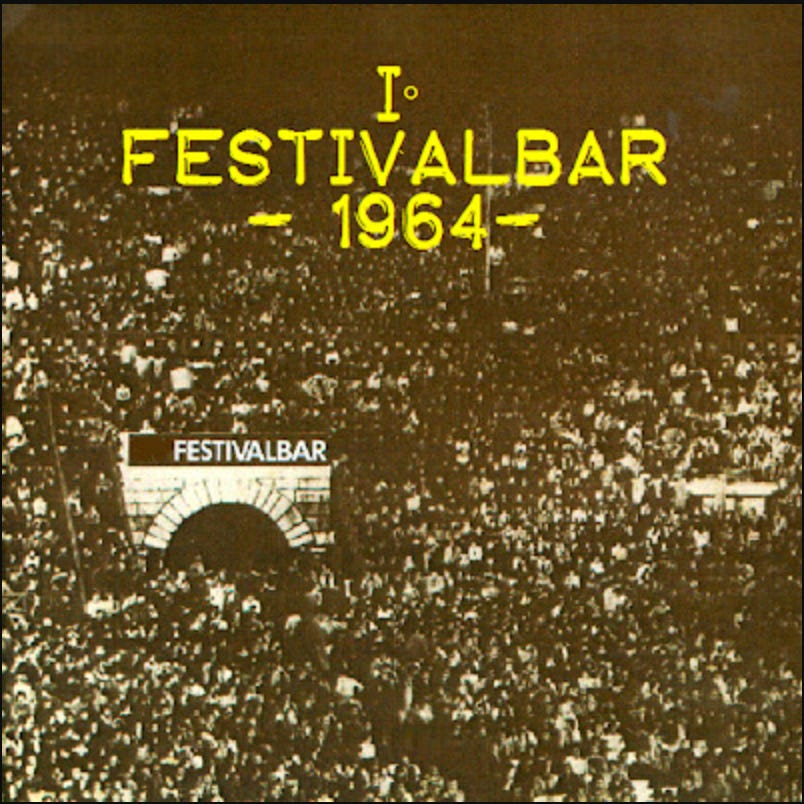
He wanted to turn this into an actual show, and that year, it aired on the radio, and, in 1967, Festivalbar debuted on the state network RAI. The more TVs gained prominence in households, though, the less relevance jukeboxes would hold, to the point that, in 1983, the show moved to Fininvest’s own Canale 5, in a multi-event affair on a weekly basis that took place in some of Italy’s most famous town squares and arenas, such as Lignano Sabbiadoro’s Arena Alpe Adria and the landmark that is the Arena di Verona. In 1989, it moved to Italia Uno, Italy’s youth-focused channel. Throughout the 1980s and 1990s, the hosts were youth-centric personalities, such as DJ, producer, and presenter Claudio Cecchetto (remember Gioca Jouer, composed by Claudio Simonetti?), a young Gerry Scotti, and Fiorello.
From the very beginning of the initiative, however, what stood out was that it was not limited to Italian music. Caterina Caselli and the likes went hand in hand with The Beach Boys and The Rolling Stones. Within the same edition, the pool of contestants was the opposite of cohesive and homogeneous: in 1970, “Finché La Barca Va” by Orietta Berti competed with Led Zeppelin’s “Whole Lotta Love”; in 1976, David Bowie vs. Cugini di Campagna; in 1980, we saw Blondie’s “Call Me” face off against Rettore’s “Cobra.” Festivalbar drew huge audiences, so it was catnip for sponsors; the official Sanremo compilation paled, in terms of sales, compared to Festivalbar’s.
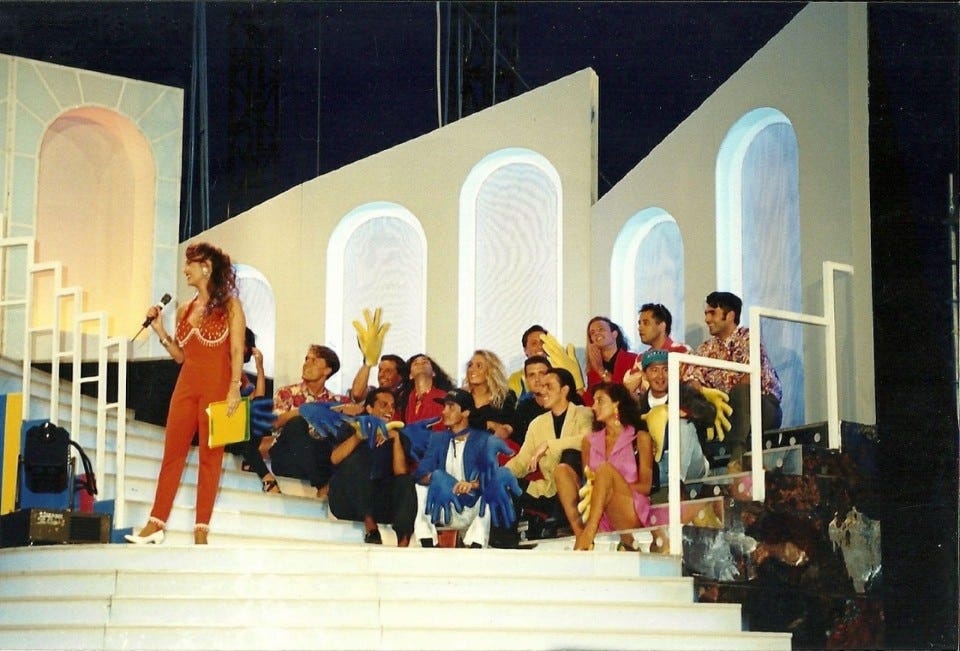
Festivalbar was the ideal stage for youth-oriented music tastes: the 1980s were for italodisco; the 1990s were for Eurodance, bubblegum pop, and boy bands. Indeed, the 1990s were peak Festivalbar, and we might blame it for Italian Millennials’ enduring nostalgia and passion for 1990s Eurodance tracks as foundational texts. Creator Billi Foster zeroes in on the 1990s as the peak earworm era. “Thanks to the obsessive replay of episodes via television, a song could get stuck in the heads of millions of people and never leave,” he said. One of the participating songs would be chosen as the de-facto opening theme, which, in turn, would amplify its earworm component.
1998 was a watershed moment: Vittorio Salvetti passed away and more and more households were gaining access to high-speed internet, which, in turn, meant the ability to peruse file-sharing platforms. People started making their own mixes, and did not need Festivalbar’s “official” releases.
On an amusing note, Festivalbar famously used lip sync, and artists sometimes would protest this production-wide convention. Music creator Mark The Hammer gives a sound explanation regarding the use of playback: it streamlines the production, given that, during certain episodes, you’d have up to thirty different performers onstage, each with their quirks, singing just one song (not even a 15-min. set), so lip sync would make the sound tech’s job a little easier and keep the assembly line well oiled.
So what does that have to do with disco and dance music? Whenever there was a record that managed to combine dance rhythms, an electronic base, but a pop-and-radio-play-friendly top line, that was all the prime Festivalbar audiences would ask for. There are no deep cuts in this selection of videos, and if you read the entirety of the preceding paragraphs, you’ll understand why.
Did your country have anything comparable to Festivalbar?
In 1976, Marcella Bella sang a disco version of “Resta Cu’mme,” one of the eminent examples of Italian disco in that it gave the Neapolitan standard a Philly-sound flair.
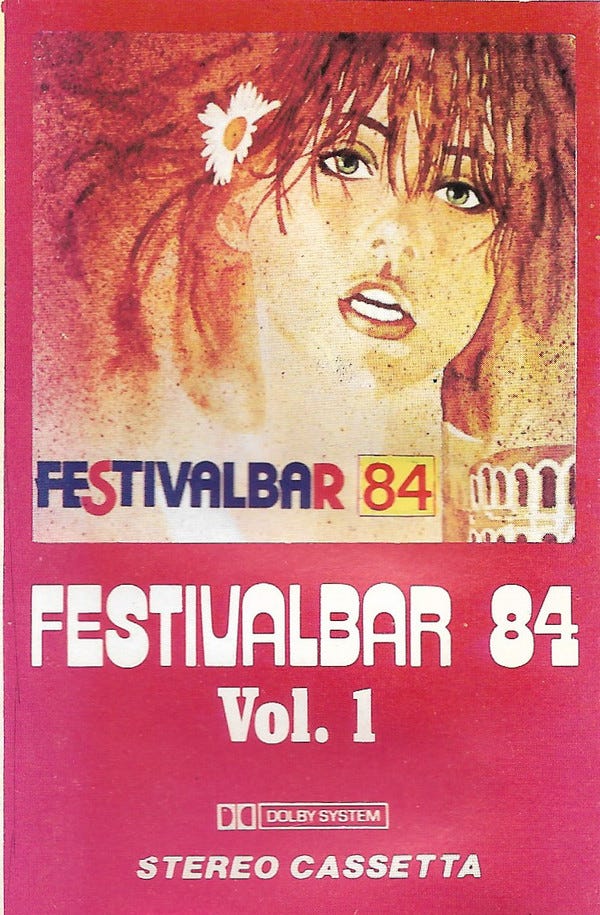
Raf’s “Self Control” came out in 1984, so he did make an appearance in the 1984 edition.
In 1985, Baltimora appeared with “Tarzan Boy,” and other Italo acts that year included Den Harrow’s “Future Rain,” Jo Squillo’s “Roulette,” and Vivien Vee’s “Americano.” The DiscoVerde episode that took place in Rimini actually had a full dance-music lineup.
In 1986, a highlight of the festival was Tracy Spencer’s “Run to Me.” The track is a clear example of Italo disco both hybridized with pop and with the first hints of what would become the distinctive signifiers of Eurodance. Italian comedies of the time, such as Scuola di ladri, L’estate sta finendo, and Rimini Rimini, all included the track.
In 1987, Spagna won the festival with “Dance Dance Dance,” another Italo-disco pop hybrid that has the feeling of 1980s Madonna and prime Cyndi Lauper. The lyrics were prime audience bait: it has been, historically, hard to resist songs that contained a clear-as-day invitation to dance.
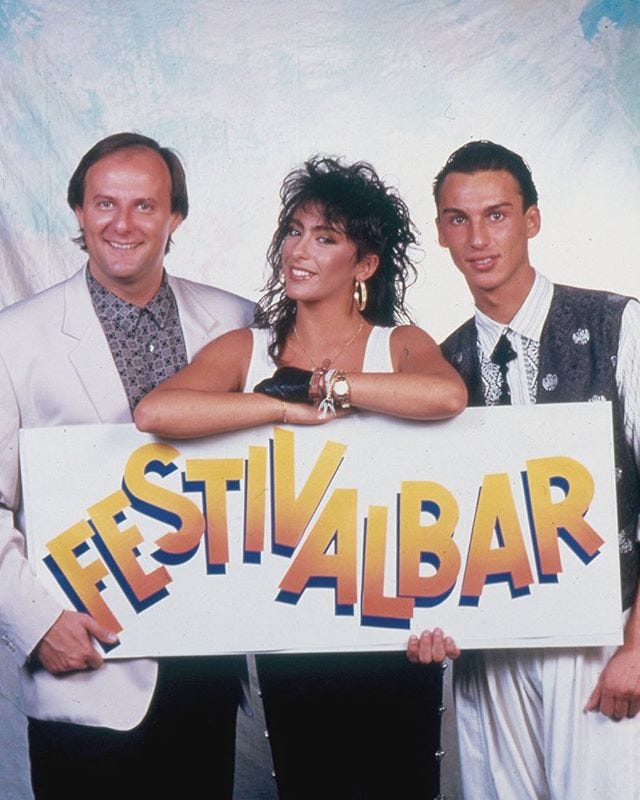
That same year, we saw Sabrina Salerno with “Boys,” and she returned in 1988 with “All of Me,” “My Chico,” “Funky Girl,” and “Guys & Dolls.”
We’re now knee-deep into Eurodance territory so it comes to no surprise that the 1992 edition saw the appearance, for example, of Snap!’s “Rhythm Is a Dancer.”
Eurodance is mainly an Italo-German affair (I’ll stand by it till the day I die), so in 1993 we got another example of German dance-music excellence, namely Haddaway’s “What Is Love.” Yes, Haddaway is Trinidadian-American, but as a musician he did work in Germany.
The 1994 edition featured Corona’s “Rhythm of the Night,” which also became that year’s de facto opening theme. They tried to catch lightning in a bottle again in 1995 with “Baby Baby” and “Try Me Out.”
By 1996, Alexia was slated to become one of the main paragons of Eurodance, and “Summer Is Crazy” was an earworm that summer. She was a highlight again in 1997 with “Uh La La La,” in 1998 with “Gimme Love,” and “The Music I Like.”
1999 was the year Eiffel 65 came out with “Blue,” and they proved they were far from a one-hit wonder in the following years. They came back in 2000 with “Move Your Body,” “Too Much of Heaven,” and “My Console,” and in 2001 with “Lucky.”
French Affair’s “My Heart Goes Boom” was one of the most memorable dance hits of 2000, and, of course, Festivalbar featured them.