

Giuni Russo part III: faith, spirituality, mysticism
How Russo and Sisini set out to use the Bible and the writings of 16th-century mystics as the foundations of their songs.


After elevating pop music with her collaborations with Franco Battiato, after subverting—with finesse—the “summer song” trope, playing with the modes and the arias of the operatic repertoire, and penning complex nocturnes, Italian singer Giuni Russo found inspiration in her faith, but not of the “Sunday Mass” variety.
From the 1990s until her death in 2004, Giuni Russo was deeply immersed in the study of the Bible and of the Catholic mystics, which in turn imbued her music with a more rarefied and otherworldly dimension. While we already saw how she experimented with pagan themes in the 1980s, in songs like “L’oracolo di Delfi,” “Venere Ciprea,” and “Anima pagana,” the following decade was devoted to the study of the Bible and the 16th-century Spanish mystics.
The seeds were sown in 1986, following the success of Energie, Vox, Mediterranea, Giuni, and Album (read part 1 and part 2 of our Giuni Russo analysis). Giuni’s suffering due to professional strife was actually a building block of her spirituality,” writes author Bianca Pitzorno in her biography of the artist. Indeed, Russo herself would credit the professional disagreement with Caselli for prompting her towards a spiritual quest. “Both her and Sisini felt the need for a deeper sense of their experience, in order to access deeper truth.”
Upon the completion of their home in Portobello di Gallura in 1990, they would delight in spending winters there, which was conducive to contemplation, meditation, and the study of religious texts. Giuni had read Ignatius of Loyola and was taken by the core ideas of his spirituality and his spiritual exercises.
ICYMI:
Giuni Russo Part I: Solar Energy, Voice, and Mediterranean Longing

Giuni Russo was one of the greatest innovators in Italian music. A classically-trained soprano, she fused Italian music traditions and global influences with experimentalism in instrumentation, top-line melody, and lyrics.
In the 1990s, Russo and Sisini were on a spiritual path. Giuni wanted to attend a class on spiritual exercises that followed the St. Ignatius de Loyola method, and, on a fateful trip to Tuscany, they stumbled upon a convent where the nuns were practicing Loyola’s precepts. They were introduced to the exercises on that occasion, but, given how remote the location was, the nuns recommended a sister organization in Milan in the neighborhood of Brera, and that’s where the two would continue their spiritual journey and a line-by-line study of the Bible. In particular, Russo and Sisini entertained a deep spiritual relationship with the Discalced Carmelite Nuns, mostly on the grounds of their shared admiration for the writings of Teresa of Avila (1515–1582) and John of the Cross (1542–1591). Russo is actually buried in the Carmelite section of Milan’s Cimitero Maggiore, on the grounds that she was a carmelite honoris causa— her music (carmen) delighted (laetari) people.
ICYMI:
Giuni Russo Part II: Giuni, Album, A Casa di Ida Rubinstein

Let’s continue our journey through Giuni Russo’s discography—thank you, by the way for the love and appreciation you showed for Part I .
In an era when Rosalía’s Lux managed to give faith and mysticism-themed song worldwide and mainstream appeal, Russo’s spiritual songs deserve “graduating” from their niche categorisation.
Unlike what we did in Part I and Part II, we will here proceed by song, rather than by album.
La sposa
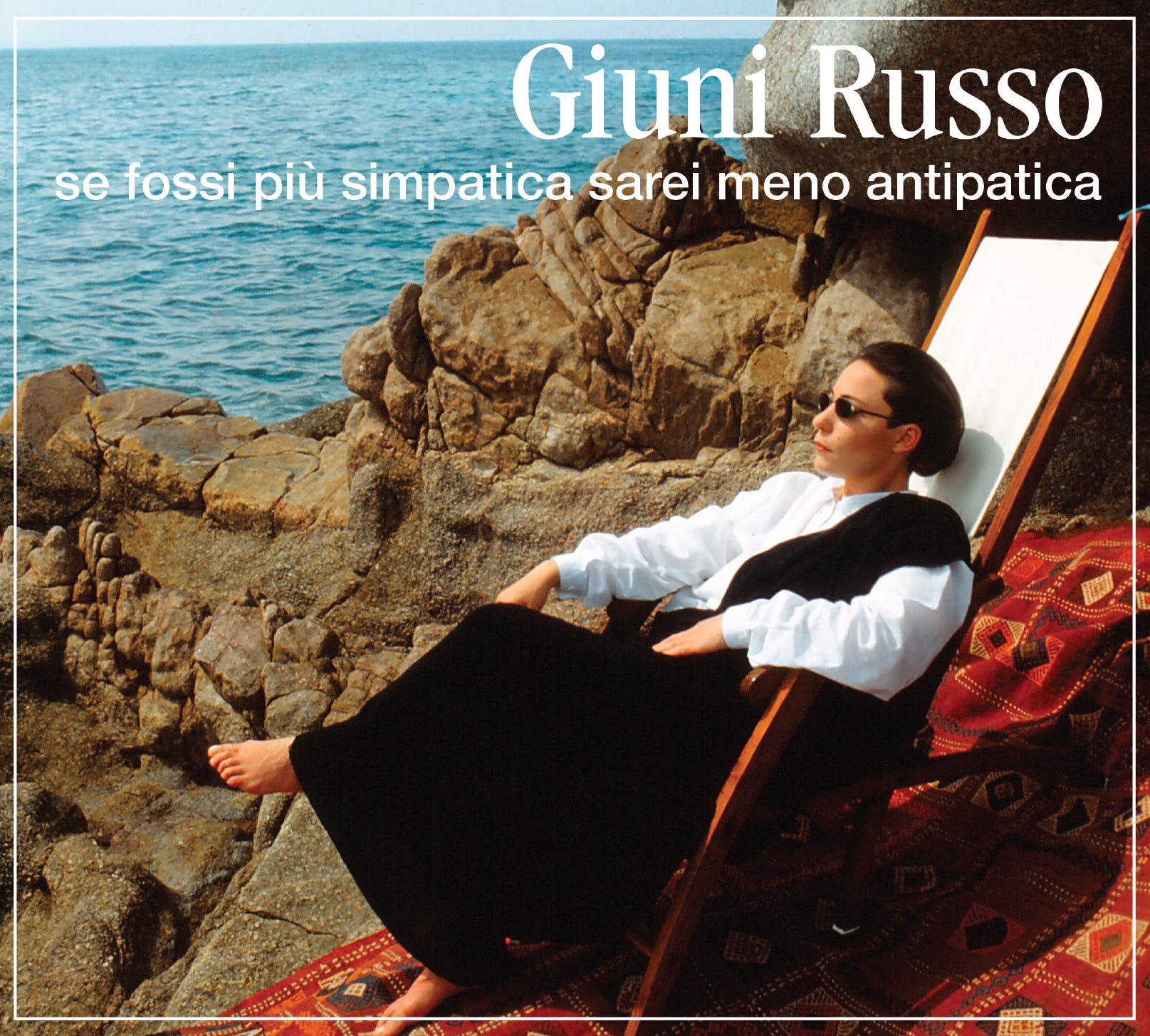
Originally composed for her 1994 record Se fossi più simpatica sarei meno antipatica, subsequently rechristened as La Sposa in 1997, “La sposa” has a melody that borrows from Middle Eastern influences and that has a liturgical, almost ritual-like progression. Elements of Italian pop, even in its art-pop variety, are hardly recognizable.
Lyrics-wise, the biggest inspiration comes from the Old Testament, part of the Book of Sirach, “Wisdom will praise herself,” with some hints from the “Song of Songs.” True to the source material, the metaphors hearken from the botanical world and from substances that have some importance in the Bible (myrrh, cinnamon tree, storax balsam, honey).
In the lyrics, Russo addresses her own soul—“Dimmi anima mia come nascere dal niente? Se non ho che te”—so she seemingly identifies with the title character, the bride. In live performances, she’d introduce the song as “hymn to knowledge,” thus imbuing it with mysticism. Some versions of the song have the choir section performed by Discalced Carmelite Nuns.
La sua figura
“La sua figura” borrows from Cantico espiritual by St. John of the Cross, a close collaborator of St. Teresa of Avila in the Carmelite-order reform.
The source material is a mystical text written and set up as a supplication, and, following the nature of the source material, the melody can’t seem to find a stable landing or resolution, in that Russo expresses a type of yearning that remains unresolved.
The piece has a combination of intervals, vocal ornamentation, modulations, and accompaniment, which set it apart from the traditional Italian pop ballad. With the restrained instrumentation, “La sua figura” leaves room for Russo’s vocals to fully breathe.
The lyrics talk about the impossibility to heal from love-related suffering without the presence of the loved one. However, the lyrics do not culminate in finding this person, leaving a certain tension underneath.
Similar to “La sposa,” “La sua figura” was part of her 1994 album Se fossi più simpatica sarei meno antipatica.
Moro perché non moro
During Lent in 1995, Sisini and Russo were driving around Sardinia and were on their way back to their home base when, allegedly, Giuni started singing, repeating “moro perché non moro” in chant-like fashion. She was not humming, but was actually enunciating the words of the song, directly quoting St. Teresa of Avila and her poem “Il desiderio,” “Desiderio del cielo.”
They had no way of recording the impromptu melody, so Sisini allegedly made her keep going at it until they got home, where they captured a rudimentary version of the structure just with voice and guitar.
Upon recording the demo, the two of them wanted the Discalced Carmelites to sign off on it, and the abbess of the Milanese Discalced Carmelites convent promptly did so, and also requested all the other spiritual-themed records by Russo.
In live performances, Russo introduces it as follows: The holy mother says, “l’orazione mentale non consiste nel molto pensare, ma nel molto amare.”
Some versions have voices chanting “moro perché non moro,” while other edits have a more straightforward synth-like base.
Despite having been written in 1995, this song was only included in the album Morirò d’amore from 2003.
Notable versions include a duet with Lene Lovich and Antonella Ruggiero covering it for “Voci Parallele”, a celebration of Russo’s life and career 20 years after her death.
Nada te turbe
With a rarefied musical accompaniment and with a voice that exerts restraint rather than virtuosic leaps, Giuni Russo set Teresa of Avila’s prayer of the same name. The voice then flourishes as the song progresses. Dulce Pontes sang a rendition of this song during a celebration of Giuni Russo and Teresa of Avila in Milan in 2015.
The live version of “Nada te turbe” was included in Russo’s live album Las Moradas, recorded in 1999 and released in 2015; the radio version is included in her posthumous collection of previously unreleased songs, Cercati in Me, from 2008.
O vos omnes
Again, a rarefied and atmospheric instrumentation gives way to a prayer with lamentation expressing Mary’s sorrow at the Crucifixion, also quoting the Book of Lamentations. For this song, she makes use of her more operatic voice. The track is included in the 2003 album Morirò d’amore.
The Pittsburgh Camerata sang a polyphonic rendition of this song.
Morirò d’amore
Russo and Sisini initially wrote the song in the late 1980s, using the texts of St. John of the Cross as their foundation. Originally presented—and rejected—at the selections for Sanremo Music Festival, first in 1989 and then in 1997, when those in charge of the selection claimed she sang off-key, “Morirò d’amore” was then presented during the 2003 edition, when Russo was fully in the throes of the illness that would kill her one year later. The only difference between the two versions lay in the arrangement, this time courtesy of her long-time friend and collaborator Franco Battiato. This was Russo’s first Sanremo appearance in 35 (!) years.
Given the time it was officially released, this song reads as a valediction and a testament.